
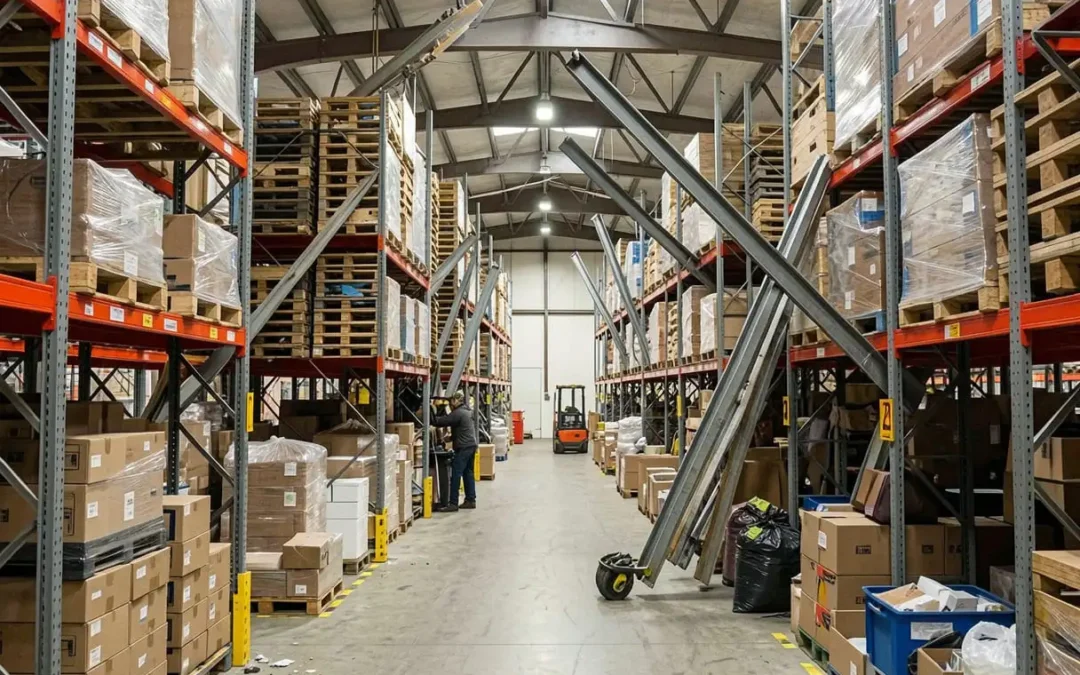
Small Oversights That Quietly Turn Into Big Problems
Most warehouse racking failures don’t happen out of nowhere. They build up slowly, from small habits that seem harmless at the time: a slightly overloaded shelf, a dent nobody reported, a beam that wasn’t quite installed to spec. On their own, these things rarely cause an immediate problem. Together, over months or years, they’re often exactly what leads to a collapse.
Good warehouse racking safety isn’t complicated, but it does require paying attention to the details that are easy to overlook when a warehouse is busy and everyone’s focused on getting orders out the door. Here are six of the most common mistakes businesses make, and what to do instead.
1. Loading Beyond the Rated Capacity
Every racking system is built to hold a specific weight per level, and that number isn’t arbitrary. It accounts for how the load is distributed and how much stress the structure can safely absorb. When a shelf gets loaded past that limit, even by what seems like “just one more box,” it puts real strain on the beams and frame.
The fix is straightforward: make sure load capacities are clearly labeled at every level, and make checking them part of how staff load stock, not an afterthought. If nobody’s tracking what a shelf is actually rated for, it’s only a matter of time before it gets exceeded.
2. Treating Minor Damage as Not Worth Reporting
A forklift clips an upright. There’s a small dent, maybe some scraped paint. It’s tempting to think, “it’s still standing, so it’s fine.” But racking is engineered to fairly precise tolerances, and even minor damage to a frame or upright can significantly reduce how much weight it can safely support.
The safer approach is building a simple culture around reporting: if something gets bumped or damaged, it gets flagged immediately, no blame involved, just documentation. A quick visual system, marking damaged sections clearly until they’re assessed or repaired, makes it easy for everyone to know what’s safe to load and what isn’t.
3. Installing Racking Without Professional Setup
Racking looks simple once it’s up, which is part of why it’s sometimes treated as something anyone can assemble. But incorrect installation, whether it’s a beam sitting at the wrong pitch, an upright that isn’t properly anchored to the floor, or components that aren’t quite aligned, can compromise the entire system from the very first day it’s loaded.
Working with an experienced installer who follows the manufacturer’s specifications isn’t an added cost, it’s what makes everything that comes after actually safe. This includes making sure the flooring itself can handle the load points, since even a perfectly installed rack can be undermined by uneven or weakened concrete underneath it.
4. Overlooking the Small Locking Components
The parts that hold beams securely in place, safety clips, locking pins, or similar connectors, are easy to overlook because they’re small and rarely thought about once installation is done. But they’re often the only thing preventing a beam from shifting out of position if it gets knocked or nudged during regular warehouse activity.
A periodic check of these components, as part of a routine inspection rather than a separate task, catches missing or loose pieces before they become a real problem. It takes very little time and closes a gap that’s easy to miss otherwise.
5. Mixing Components From Different Systems
It happens more often than businesses expect: a leftover beam from an old setup gets reused because it “looks like it fits.” Different racking systems use different beam profiles, connection designs, and steel specifications, and even when parts appear compatible, they may not lock together securely or share the same load ratings.
The safer route is sticking with one system and sourcing replacement or additional parts from the original supplier whenever possible. If expansion is needed, working with a supplier who understands the existing setup avoids the guesswork of mixing components that were never designed to work together.
6. Skipping Routine Inspections
Perhaps the most common mistake of all: going months, sometimes years, without a proper inspection because everything “looks fine” day to day. Damage accumulates quietly, labels fade, and small issues that would have been an easy fix become bigger problems by the time they’re finally noticed.
Building a simple inspection routine, regular visual walk-throughs combined with a more thorough periodic review, catches most issues long before they become dangerous. Keeping a record of what’s been checked and repaired also makes it far easier to demonstrate that safety has been taken seriously, which matters both for your team and for compliance.
Building Better Habits, Not Just Fixing Problems
None of these mistakes are complicated to fix on their own. What makes them dangerous is how easily they go unnoticed, especially in a busy warehouse where racking tends to fade into the background until something goes wrong. The businesses that manage warehouse racking safety well aren’t necessarily doing anything extraordinary, they’re just consistent about the basics: checking load limits, reporting damage, inspecting regularly, and installing things properly the first time.
Taking a fresh look at your current setup with these six mistakes in mind is often enough to catch problems before they become serious. If your racking hasn’t been reviewed in a while, or you’re planning an expansion and want it done right from the start, Inspec Engineering can help you choose a system that fits your operations and make sure it’s installed and maintained the way it should be.